
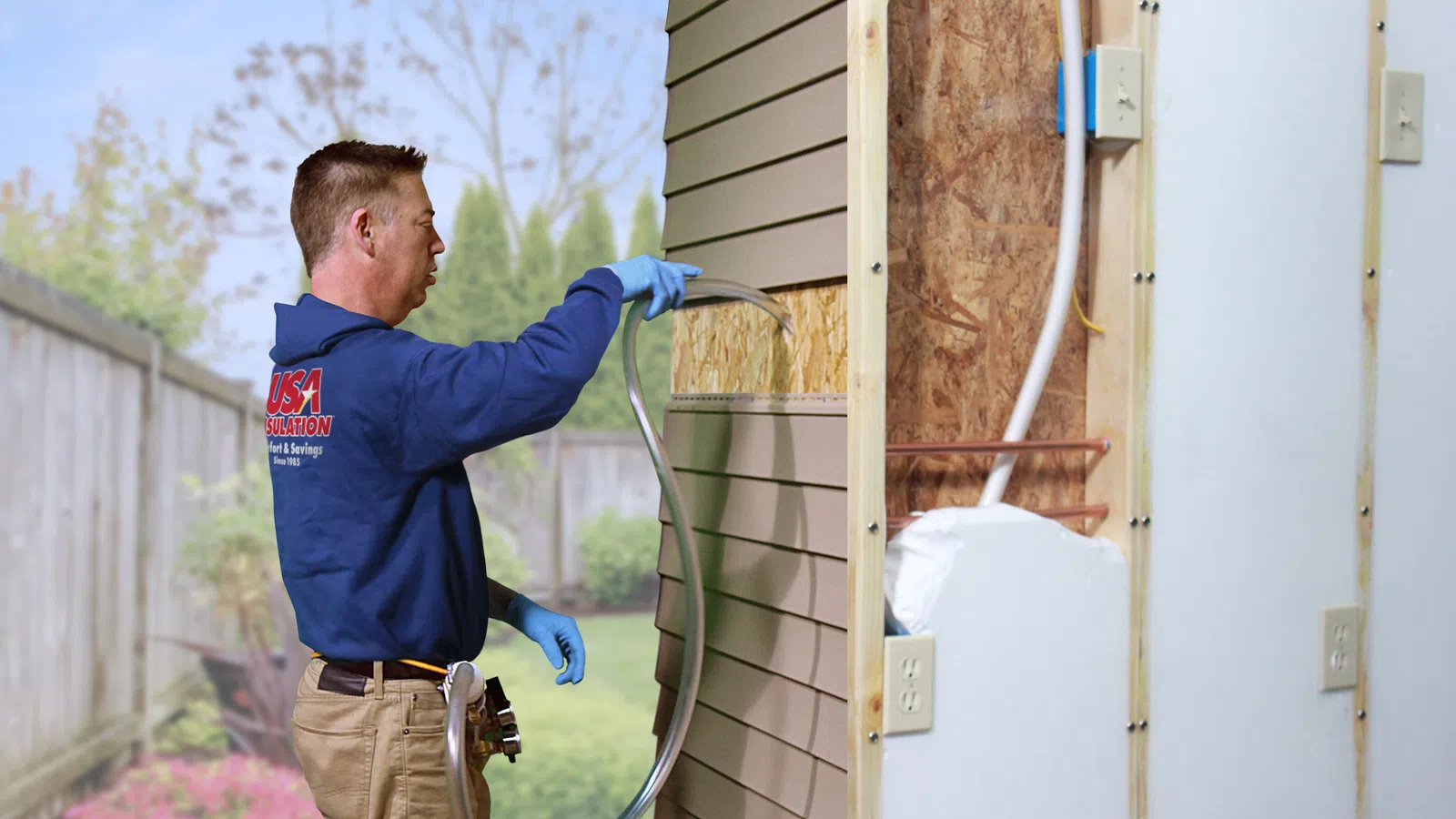
The cost of injection foam insulation in Bowling Green depends on how many square feet of exterior wall your home has and how hard those walls are to reach. Brick or siding, one story or two, and what is already inside the walls all change the price. An in-person assessment can help establish an accurate project estimate.
If you were hoping for a flat price, that answer is a little frustrating. Stick with us, because by the end of this page you will be able to walk around your own house and understand why your quote looks the way it does.
Homes in this part of Kentucky are a mixed group. A brick ranch off Nashville Road, a two-story farmhouse outside Russellville, and a 1960s home near downtown Glasgow may have similar floor plans on paper and very different walls.
Why is there no flat price for injection foam?
Injection foam fills the hollow spaces inside your existing exterior walls. The work is done cavity by cavity, so the job grows with the amount of wall and with the effort it takes to get to it.
A contractor who quotes a single price for any house is either padding it to cover the hard jobs or planning to make it up somewhere else. A price built from measurements is fairer to you.
How can you estimate your own wall area?
You can get a rough sense of your wall area in ten minutes with a tape measure. It will not replace an inspection, but it helps you follow the math on a quote.
- Measure the length of each outside wall and add them together. That total is the perimeter of the house.
- Multiply the perimeter by the wall height. Most single-story homes have walls about 8 feet tall. For two stories, do each floor.
- Add the triangle-shaped gable ends if there is living space behind them.
- Subtract the windows and doors. They are not filled.
- Leave out any wall that faces an attached garage unless the garage is unheated and that wall is cold.
What is left is close to the wall area a crew would insulate. If two quotes disagree widely, comparing their wall area to your own figure is a quick way to see which one is off.
How does the way your home is built change the job?
Construction matters almost as much as size. Here is how the common local home types differ.
- Brick ranches. These are everywhere around Bowling Green, Franklin, KY, and Glasgow. Most are brick veneer over a wood frame, with a hollow wall behind the brick that can be filled. Brick is reached and patched differently than siding, and that is reflected in the quote.
- Sided homes. Vinyl, aluminum, and wood siding each come with their own way in. The goal is the same in every case: reach each cavity, fill it, and leave the outside looking the way it did.
- Older farmhouses. Homes in Logan, Simpson, and Butler counties that date back generations can have taller walls, uneven framing, and old plaster. They often have no wall insulation at all, which makes the benefit large, and they can take more time.
- Homes with additions. A room added in the 1980s may already have some insulation while the original house has none. Each section gets checked on its own.
- Two-story homes. More wall, more height, more equipment.
What else affects the price?
A few smaller items can move a quote in either direction.
- Existing insulation. Thin or slumped batts inside a wall change how the cavity is filled.
- Access around the house. Decks, carports, screened porches, propane tanks, and shrubs planted tight to the wall slow things down.
- Finish details. Painted brick, stained wood siding, or specialty trim can call for extra care when closing up.
- Travel. Ask whether your location affects the price. A written quote should already include it.
Should you insulate every wall or just the worst ones?
Either is possible. If the budget is tight, start where you feel the problem most, which is often the side of the house that takes the winter wind or the rooms at the far end of the ductwork.
Keep the tradeoff in mind. Equipment setup is a fixed part of every visit, so two partial jobs usually add up to more than one complete job. An uninsulated wall also keeps pulling heat out of the rooms next to it. Ask for the whole house and the priority walls to be priced separately so you can see both numbers.
What should a written quote include?
A quote should let you see exactly what you are buying. Look for these items before you sign anything:
- The measured square footage of wall to be filled.
- A list of which walls are included and which are not.
- The product name and its R-value per inch.
- Where the access holes will be made and how they will be finished.
- How long the work should take.
- What cleanup covers.
- What paperwork you will receive afterward, such as product specs and a record of the areas treated.
Low quotes most often leave something out. The usual gaps are walls that were skipped, patching that is left to you, or a different product. Read the scope line by line.
How can you plan for the full project cost?
It is worth a look before you decide.
When budgeting, focus on the actual wall area, access conditions, and written installation scope. Avoid relying on an incentive until eligibility and program details have been independently confirmed.
Do not budget for the old federal insulation tax credit. The IRS states that the credit is not available for improvements placed in service after December 31, 2025.
Before moving forward, ask for a written estimate that outlines the scope and price.
What do you get for the money?
You get walls that finally do their share. By USA Insulation's estimate, walls account for about 35 percent of a typical home's energy loss, more than the attic at about 25 percent. In a house with empty walls, that is a lot of heat leaving through surfaces you cannot see into.
After the walls are filled, most people notice the change in everyday ways. The couch against the outside wall is no longer the cold seat. The back bedroom stays closer to the thermostat setting. The system cycles less often on a windy night. Savings on the bill vary from house to house, so be careful with anyone who quotes you a specific percentage.
Insulation also stays put. It has no moving parts, and it can keep working for decades when it stays dry and undisturbed.
How does a home assessment lead to a price?
An assessment can help reduce the guesswork. Your walls are measured, the exterior is noted, and the inside of the wall is checked so you know whether it is empty, partly filled, or already insulated.
You then receive a written price for your home. Review the written estimate and take the time you need to decide.
Frequently Asked Questions
What is the average cost of injection foam in Bowling Green?
An average would not help you much, because local homes range from small ranches to large two-story farmhouses. A measured quote for your own walls is the number to trust.
What should I ask about the estimate?
Ask the local team directly about any current payment options before making a decision.
What should you ask before budgeting for insulation?
Ask about the full project scope, what the quote includes, and any site conditions that could change the final cost.
Will the crew have to remove my drywall?
No. Injection foam goes in through small holes that are plugged and patched, so interior walls stay in place.
Can I get a price over the phone?
Not an accurate one. Wall area, height, and exterior material have to be seen and measured.
Ready for a number you can plan around?
For a clearer picture of your project's scope and cost, contact USA Insulation of Bowling Green to discuss an estimate.