
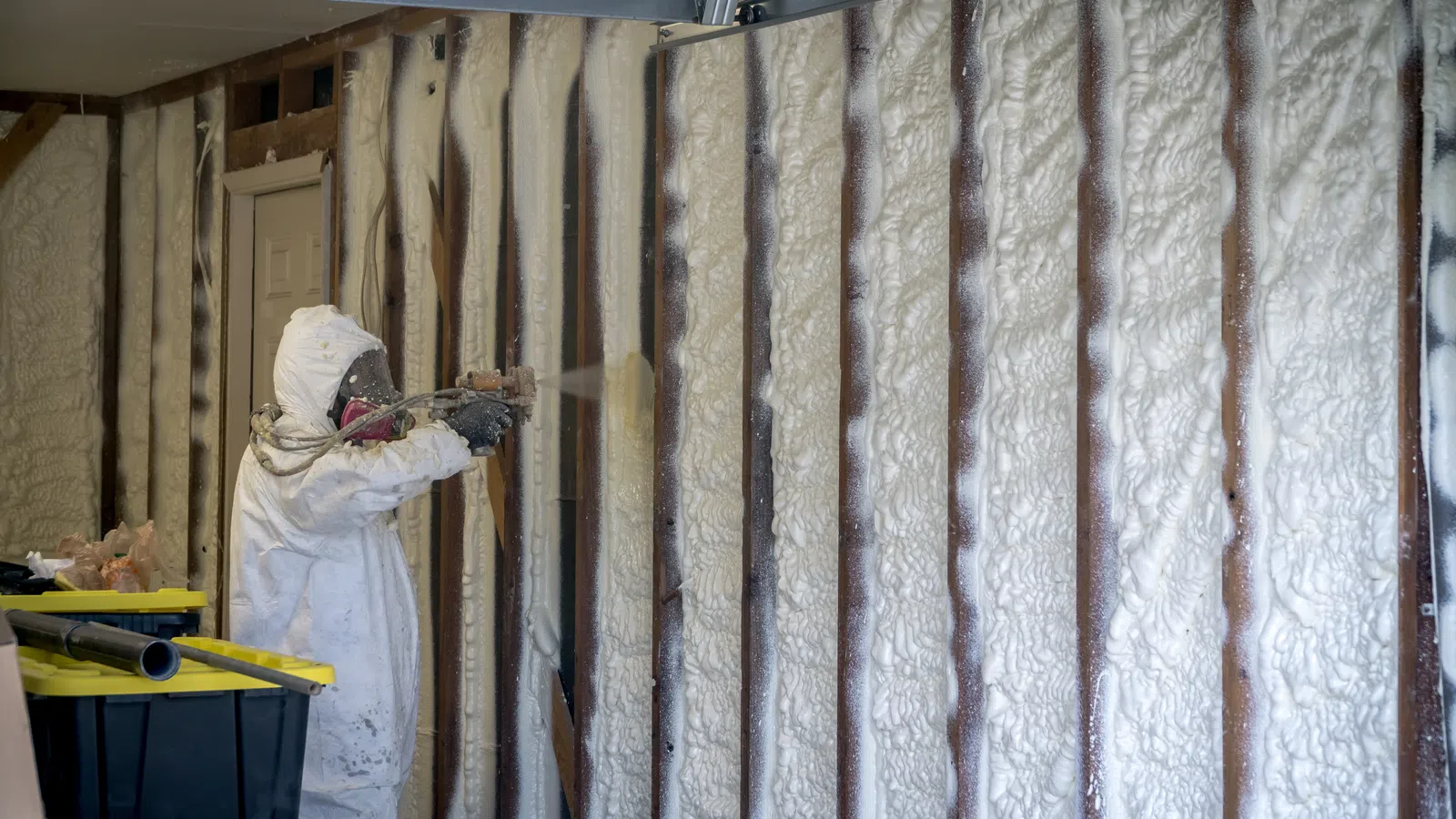
How much does it cost to insulate existing walls? The price depends on four things: how much exterior wall your home has, whether those walls are brick or siding, what is already inside them, and how easy they are to reach. A free in-home estimate measures all four and gives you a written number for your house.
That may sound like a dodge, so here is the reason. Two Lexington homes with the same square footage can have very different amounts of outside wall, and the wall is what gets insulated. A long, low brick ranch in Lexington and a compact two-story in Georgetown are different jobs, even if the listing sheets look alike.
This guide walks through what moves the number up or down, what a good estimate should show you, and how to compare quotes without getting lost. It applies whether you live in Lexington, Nicholasville, Richmond, Versailles, Winchester or Frankfort.
Why can't you get a firm wall insulation price without a visit?
Because the things that set the price are hidden. Nobody can see inside a closed wall from a photo, and nobody can tell from a floor plan how many cavities are empty.
A visit answers the questions that matter. How many square feet of exterior wall are there once windows and doors are subtracted? Is there anything in the cavities now? Is the outside brick, vinyl, aluminum, wood or a mix? Each answer changes the labor and the amount of material.
Be careful with any price quoted by square foot of floor space. Floor area and wall area are different measurements, and wall area is the one that counts for this job.
What drives the cost of insulating existing walls?
Most of the price comes down to a short list. When you read an estimate, you should be able to find each of these in it.
- Wall area. More exterior wall means more cavities to fill. Ranch homes, homes with additions and homes with attached garages that share a wall with living space often have more wall than you would guess.
- Exterior finish. Brick, siding and mixed exteriors are each reached a different way, and some take longer than others.
- What is in the wall now. Empty cavities, thin old batts and partly settled loose fill each call for a different approach.
- Access. Tall gables, steep lots, decks, porches and thick landscaping against the house add setup time.
- Wall depth and framing. Deeper cavities hold more material. Older homes sometimes have blocking inside the wall that means more access points.
- Scope. Doing every exterior wall costs more than doing one side of the house, and adding the attic or air sealing changes the total again.
Does a brick home cost more to insulate than a sided home?
It can cost a different amount, and the reason is the way the crew gets into the wall. Neither one requires opening your drywall or plaster.
On a brick home, small holes are drilled in the mortar joints, the foam is injected into the framed cavity behind the brick, and the holes are filled with mortar to blend in. On a sided home, a strip of siding comes off, holes are drilled in the sheathing underneath, the cavities are filled, the holes are plugged and the siding goes back on.
Homes with both brick and siding get both methods on the same job. That is common around Lexington, where a brick front with sided gables or a sided addition shows up on a lot of streets. Ask the estimator to show you exactly where the access holes will go on each side of your home.
What if your walls already have some insulation?
You will not know until someone looks, and it matters for the price. Many homes built from the 1950s through the 1970s have exterior walls that are empty or have thin batts that have slumped over the decades.
An estimator can usually check without damage by looking behind an outlet cover on an outside wall or through a small test spot. A wall with nothing in it takes a full fill. A wall with some old material in it takes a closer look to decide what will work and how much more it can hold.
This is one more reason a number given sight unseen is a guess. The honest answer starts with what is behind the wall today.
What makes Central Kentucky homes different to price?
Our weather asks a lot of a wall. Kentucky sits in climate zone 4, which means humid, hot summers and winter cold snaps, so your walls work in both directions for most of the year.
The housing here is varied too. Lexington has older in-town neighborhoods such as Chevy Chase and Kenwick, streets of mid-century brick ranches, and newer two-story homes on the edges of town and out in Georgetown and Nicholasville. An older home with plaster and original framing, a brick ranch with long outside walls and a newer home with a bonus room over the garage are three different wall jobs.
That variety is why local experience matters more than a national average you find online. An average blends homes that look nothing like yours.
What should a written wall insulation estimate include?
A good estimate reads clearly enough that you could explain it to a neighbor. Use this short checklist when one lands on your kitchen table.
- Which walls are included. You want to know if the price covers every exterior wall or only some.
- The measured wall area. This shows the number was built from your house and not from a rule of thumb.
- The product and its R-value. You should know what is going into your walls and how it is rated.
- How each exterior will be accessed and patched. Brick and siding are handled differently, and the finish work is what you will see afterward.
- What was found in the walls. Empty, partly filled or unknown should be written down.
- How long the job should take and what cleanup covers. Many wall jobs finish in about a day, and you should know what to expect on yours.
- The total and the payment options. One clear number, with any financing explained in plain terms.
How do you compare two insulation quotes fairly?
Line them up by scope first and price second. A lower number that covers half the walls is a different job, and it can leave you with the same cold rooms.
Check that both quotes use the same wall area, cover the same sides of the house and describe the patching. If one company measured and the other estimated from the driveway, trust the one that measured.
Ask each company how they will document the finished work. Photos of the access points before they are closed, and a record of the product and R-value, are useful to keep with your house papers.
Is insulating your walls worth the cost?
For a home with empty exterior walls, it is usually one of the most noticeable comfort upgrades you can make. Walls are a large share of the surface between you and the weather, and an empty cavity does very little to slow heat.
What you feel first is comfort. Outside walls stop feeling cold to the touch in January, rooms on the windy side of the house hold their temperature, and the furnace or heat pump gets longer breaks. Lower heating and cooling use follows from that, though the amount is different for every home and we will not promise a number.
Wall insulation that stays dry and undisturbed can keep working for decades, so the cost is spread over a long time in the house.
How can you lower the upfront cost?
Start by asking about current offers when you book your estimate, since they change through the year. Then ask about financing. USA Insulation of Central Kentucky offers financing through lending partners, which lets you spread the cost while the house is already more comfortable.
It also helps to ask how the price changes if the walls, attic and air sealing are done together, compared with doing them in separate visits. Your estimator can price it both ways so you can decide with real numbers in front of you.
Quick answers for Lexington homeowners
Is the estimate really free? Yes. The inspection and written estimate cost nothing, and you are under no obligation to move forward.
Will my drywall or plaster be cut open? No. Injection foam goes in from the outside through small access holes, so your interior walls and paint are left alone.
Can I get a price per square foot? A per-square-foot price only means something once the wall area is measured and the walls are checked. That is what the estimate visit is for.
How long does a wall insulation job take? Many homes are finished in about a day. Larger homes or homes with tricky access can take longer, and your estimate should say so.
Does it cost more to insulate in fall or winter? The season does not change how the work is done. Fall is a popular time because the job is finished before the coldest weeks arrive.
What is the next step?
The only wall insulation price that means anything is the one written for your house. Request a free inspection from USA Insulation of Central Kentucky, and we will measure your walls, check what is inside them and give you a clear written estimate.