
How can you tell if your house needs more insulation?
Common signs include rooms that are always hotter or colder than the rest, walls that feel cold to the touch in winter, drafts near outlets and baseboards, an HVAC system that runs constantly, and energy bills that keep climbing. If your attic insulation sits at or below the floor joists, you almost certainly need more.The best time to look for the signs your home needs insulation is right now, before the furnace settles in for the season. You need about half an hour, a flashlight, and one chilly evening.
Homes around Lexington come in every age and style, from 1950s ranches to newer two-story builds. The easiest way to find insulation problems is to walk the house one room at a time, check off what you notice, and add up your score at the end.
How do you tell if you need more insulation without opening walls?
You use your hands, your eyes, and the weather. Some checks work best today, in daylight. Others work best on the first cool night of fall, when the indoor and outdoor temperature gap is big enough to feel.
One safety note: never put fingers or tools inside an outlet. Every test here uses the back of your hand on the cover plate or wall.
Attic and attic hatch: are you seeing the tops of the joists?
Do this now. Pop your head up through the hatch with a flashlight. No need to climb in.
- Look across the attic floor. If you can see the tops of the floor joists, the insulation is at or below them. That usually means only a few inches, well short of what ENERGY STAR recommends for Kentucky.
- Look for bare patches. Cable or HVAC work often pushes insulation aside.
- Check the hatch. Is there insulation on top of the cover and weatherstripping where it sits? A bare, loose hatch is one of the most common leaks we find.
What it usually means: Kentucky is climate zone 4, where ENERGY STAR recommends R-60 for an uninsulated attic and R-49 when adding to 3 to 4 inches of existing insulation.
Upstairs bedrooms: does the second floor run hot and cold?
Do this now. If the upstairs was the hottest part of the house all summer, write that down. It points to a thin or leaky attic, which we covered in why your upstairs stays so hot.
On the first cool night, notice whether those same rooms become the coldest in the house. A room that swings both ways usually has an insulation problem.
Living rooms and exterior walls: do the walls feel cold?
Do this on the first cool night. This check surprises most people.
- The wall touch test. Lay your palm on an interior wall for a few seconds, then on a wall that faces outside. If the outside wall feels noticeably cooler, the cavity behind it may have little or no insulation. Cold walls in winter are one of the clearest under-insulated house signs.
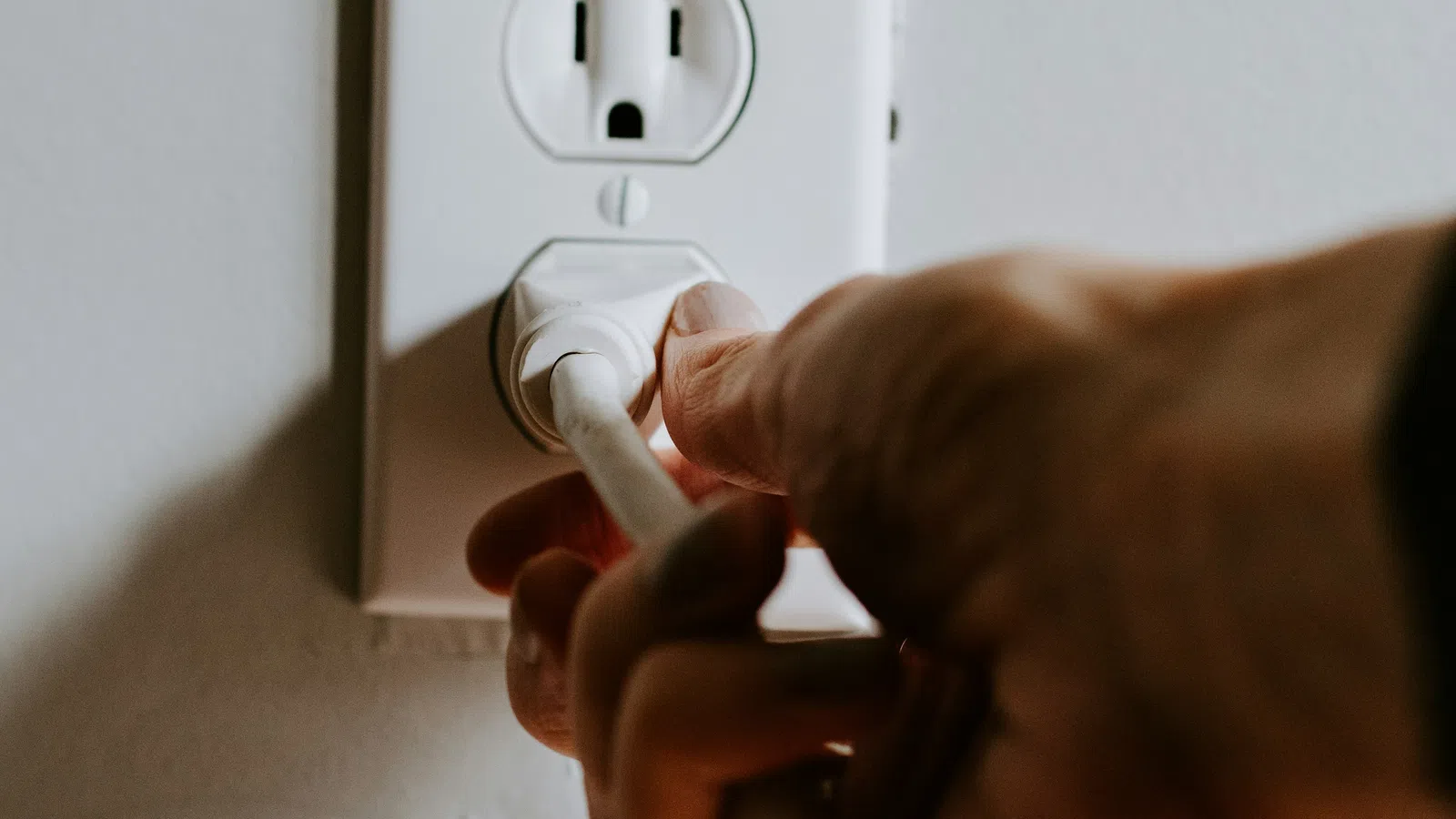
- The outlet test. On a breezy evening, turn off nearby fans and hold the back of your hand an inch from an outlet or switch cover on an exterior wall. A cool stream of air means outside air is moving through the wall cavity.
- Baseboards. Run your hand along the baseboard of outside walls. Drafts at the floor line point to gaps where the wall meets the floor.
What it usually means: USA Insulation estimates about 35% of a home's heat loss happens through the walls. Many older homes in Frankfort and Danville were built with little or nothing in the exterior walls. Those walls can be filled with injection foam from outside, without touching your drywall.
Kitchen and bathrooms: are there drafts under the sink?
Do this now. Open the cabinet doors under sinks that sit on an outside wall.
- Do you feel cool air around the pipes where they enter the wall or floor?
- Is the back of the cabinet colder than the rest of the room?
- Do the bathroom and range exhaust fans have gaps around the housing?
What it usually means: Plumbing and wiring holes are rarely sealed at construction, and together they can make a drafty house feel breezy with every window shut.
Basement and crawl space: is the rim joist bare?
Do this now. Head to the basement or look into the crawl space with a flashlight.
- Find the rim joist. That is the band of wood sitting on top of the foundation wall, all the way around the house. Bare wood with no insulation or sealing is a direct path for cold air.
- Feel along the top of the foundation. Drafts there are common in older homes.
- Note cold floors. Rooms over a crawl space with floors that feel cold under bare feet may be under-insulated below.
What it usually means: USA Insulation estimates about 15% of a home's heat loss happens through the basement and floor, and the rim joist is often the leakiest spot down there.
Garage-adjacent and bonus rooms: is one room always the odd one out?
Do this on the first cool night. Rooms that share a wall or floor with the garage face a space that is barely warmer than outdoors.
- Does a bonus room over the garage feel colder than the rest of the house by evening?
- Is its floor, or the wall shared with the garage, cool to the touch?
What it usually means: These rooms show up in newer subdivisions around Lawrenceburg and Mount Sterling. The floor or shared wall often has less insulation than the rest of the house, so the room can't hold its temperature.
What are the signs your home needs insulation, room by room?
Here's the full checklist. Print it and check off each one that applies.
Room |
What to check |
When |
|---|---|---|
Attic |
Insulation at or below the tops of the joists |
Now |
Attic hatch |
No insulation on the cover, no weatherstripping |
Now |
Upstairs |
Hottest rooms in summer, coldest in winter |
Now and first cool night |
Exterior walls |
Outside walls feel cooler than inside walls |
First cool night |
Outlets and switches |
Cool air near covers on outside walls |
First cool night |
Baseboards |
Drafts along the floor line |
First cool night |
Kitchen and baths |
Drafts under sinks, gaps around exhaust fans |
Now |
Basement |
Bare rim joist or drafts at the top of the foundation |
Now |
Crawl space rooms |
Floors cold under bare feet |
First cool night |
Garage-adjacent rooms |
Bonus room or shared wall always colder |
First cool night |
Whole house |
Furnace or AC runs nearly nonstop |
Anytime |
Whole house |
Energy bills keep climbing with no change in habits |
Anytime |
How did your house score?
Count your checks.
- 0 to 2 checks: Your home is in decent shape. Watch those spots as the weather turns.
- 3 to 5 checks: You likely have a few problem areas. A targeted fix (often the attic, the hatch, or a few exterior walls) can help a lot.
- 6 or more checks: Your house is probably under-insulated in more than one place. An inspection shows where to start.
Not sure whether the walls or the attic is the bigger problem? See where Central Kentucky homes lose the most heat.
Is it worth adding insulation before winter?
Yes. You feel the difference as soon as the heat comes on, and most installs finish in less than a day. ENERGY STAR estimates homeowners save an average of 15% on heating and cooling costs by air sealing and adding insulation (energystar.gov). Every house is different, so we won't promise a specific number.
What should Lexington homeowners do with their score?
Cold walls, drafty outlets, and a furnace that never rests are the house telling you something. This checklist helps Lexington homeowners find the spots worth a closer look, and it works just as well in Frankfort, Paris, Danville, Lawrenceburg, or Mount Sterling.
USA Insulation has insulated homes since 1985, served more than 150,000 homeowners, and is locally owned by a family and veterans. Bring your checklist to a free inspection and we'll show you what's going on behind the walls and above the ceiling.