How much does it cost to insulate a house in Louisville? It depends on which parts of the house need work (walls, attic or both), how big those areas are, what your walls are made of and how hard they are to reach. A free in-home estimate measures your house and checks the insulation you already have, so the number fits your home.
Louisville is a hard city to average. A shotgun house in Germantown, a tall brick Victorian in Old Louisville, a bungalow in the Highlands and a postwar brick home in St. Matthews share a utility company and not much else. Their insulation jobs look nothing alike, and neither do their prices.
So this guide skips the made-up averages. It explains how an insulation job is priced, part by part, so you can read an estimate with confidence whether you live in Louisville, Jeffersontown, Middletown, Prospect or across the river in Jeffersonville or New Albany.
Why is there no single price for insulating a house?
An insulation job is really two or three jobs that happen to share a house. Walls, attic and air sealing each use different materials, different tools and different amounts of labor.
Your home may need all of them or only one. A house with a well-covered attic and empty walls gets a very different estimate from a house with the opposite problem. Until someone checks both, any number you hear is a guess.
Walls, attic or whole home: how does each one get priced?
Here is a side-by-side look at the three most common scopes and what moves the price for each.
- Walls only. Priced mainly by the area of exterior wall, the exterior finish (brick, siding or both) and what is in the cavities now. This is the most labor-heavy part of most jobs, because each cavity is filled one at a time through small access holes.
- Attic only. Priced mainly by the attic floor area, how much insulation is there today and how much air sealing is needed first. An open attic floor is quicker to cover than closed walls.
- Whole home. Walls, attic and air sealing done as one project. The total is higher than either part alone, and you deal with one crew, one schedule and one plan for the house.
The takeaway: the right scope is the one that fixes where your house is losing heat. An inspection shows which of the three that is.
What affects the cost of wall insulation?
Wall area comes first. The more outside wall you have, the more cavities there are to fill. Long, narrow homes and homes with additions tend to have a lot of exterior wall for their floor space.
The exterior finish comes next. On sided homes, a strip of siding is removed, the cavities are filled through holes in the sheathing, and the siding goes back on. On brick homes with a framed cavity behind the brick, the holes go in the mortar joints and are patched afterward. Homes with a mix get both.
What is already in the walls matters too. Empty cavities take a full fill. Walls with old, thin material need a closer look. An estimator can usually check through an outlet opening on an outside wall without doing any damage.
Access rounds it out. Three-story walls, tight side yards between close-set houses, porches and decks all add setup time. Tight lots are a fact of life in many of Louisville's older neighborhoods.
What affects the cost of attic insulation?
The starting point is the biggest factor. Louisville is in climate zone 4, where ENERGY STAR recommends R-60 for an attic with no insulation and R-49 when adding to 3 to 4 inches already in place. The further your attic is from that target, the more material it takes.
Size and shape are next. A simple open attic over a ranch is straightforward. A finished half-story with knee walls and sloped ceilings, which is common in older Louisville homes, takes more planning.
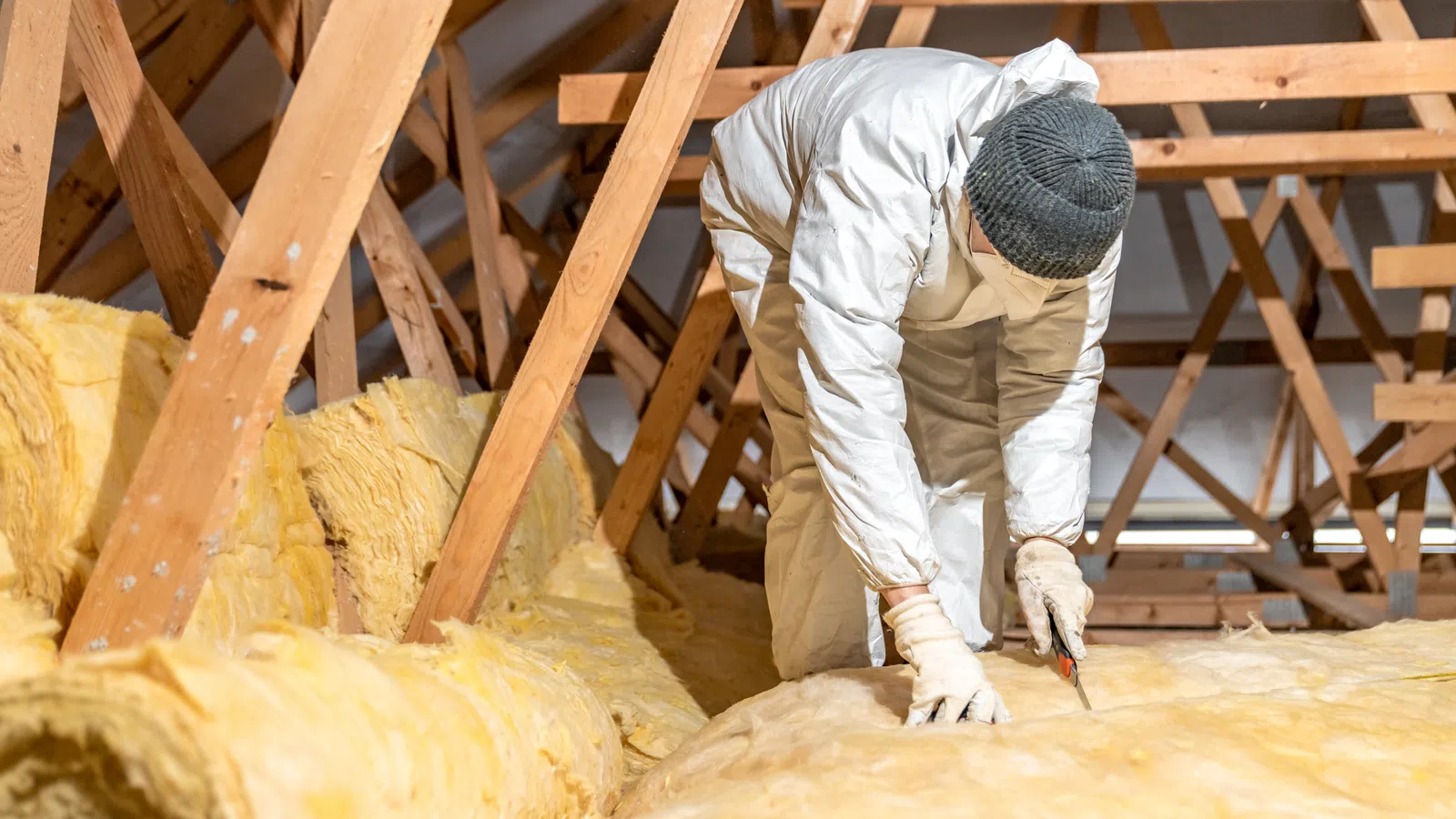
Prep work is the part people forget. Sealing gaps around lights, pipes, wiring and the attic hatch comes before new insulation goes down. If old insulation is wet or badly damaged, it may need to be removed first, and that adds to the job.
Does a whole-home job cost less than doing it in pieces?
Ask your estimator to price it both ways. That is the only reliable way to know for your house.
There are practical reasons people choose to do everything together. The crew sets up once, the air sealing and insulation are planned as a system, and you get through the disruption in one go. You also feel the full difference right away, which is hard to judge when the work is spread over two winters.
Doing it in stages is a reasonable choice too. If the budget only covers one part this year, a good estimate tells you which part will help your home the most.
What should you expect from a free insulation estimate?
A real estimate is built from measurements. Someone should walk the outside of your house, look in the attic and check at least one exterior wall.
When the written estimate arrives, look for these things:
- The areas included, listed separately (walls, attic, air sealing).
- The measured size of each area.
- The product going into each area and its R-value.
- How the walls will be accessed and how the access points will be patched.
- The expected time on site and what cleanup includes.
- One total, with payment and financing options spelled out.
If a quote is a single number with no breakdown, ask for the detail. You cannot compare two quotes when you do not know what each one covers.
How does insulation pay you back on your LG&E bill?
Heating and cooling are the largest part of most home energy bills, and insulation works on exactly that part. A house that holds its temperature asks less of the furnace in January and less of the air conditioner in July.
ENERGY STAR estimates that air sealing a home and adding insulation in attics, floors over crawl spaces and basement rim joists saves an average of 15 percent on heating and cooling costs. That is an average across many homes. Yours could land above or below it, and no honest estimate will put a fixed dollar figure on your future bills.
The comfort side is easier to predict. Fewer drafts, warmer walls and rooms that match the thermostat are what most people notice in the first cold week.
How can you make the upfront cost easier?
Ask two questions when you schedule. First, what offers are running right now? They change during the year, and the office can tell you what applies to your project.
Second, ask about financing. USA Insulation of Louisville offers financing through lending partners, so the cost can be spread out instead of paid all at once. Have the estimator explain the terms in plain language before you decide.
It also pays to be clear about your priorities. If one cold bedroom or a sky-high winter bill is what pushed you to call, say so. It helps the estimator point you to the part of the job that addresses it.
Frequently asked questions
Is there a charge for the inspection and estimate? No. The inspection and written estimate are free, and there is no obligation to go ahead with the work.
Which costs more, walls or attic? Walls usually take more labor because each closed cavity is filled individually. The real answer for your home depends on how much wall and attic area you have and what is there now.
Do I have to do the whole house at once? No. You can start with the area that is costing you the most comfort and add the rest later. Ask for the estimate to list each area separately.
Will insulating the walls damage my plaster or drywall? No. Injection foam is installed from the outside through small access holes, so the inside of your home is left as it is.
Why do online cost calculators give such different numbers? They rely on national averages and floor area. They cannot see your wall construction, your attic depth or your access, and those are the things that set the price.
Ready for a real number?
A price built from your own walls and attic beats any average. Request a free inspection from USA Insulation of Louisville, and we will measure your home, show you what we find and hand you a clear written estimate.