
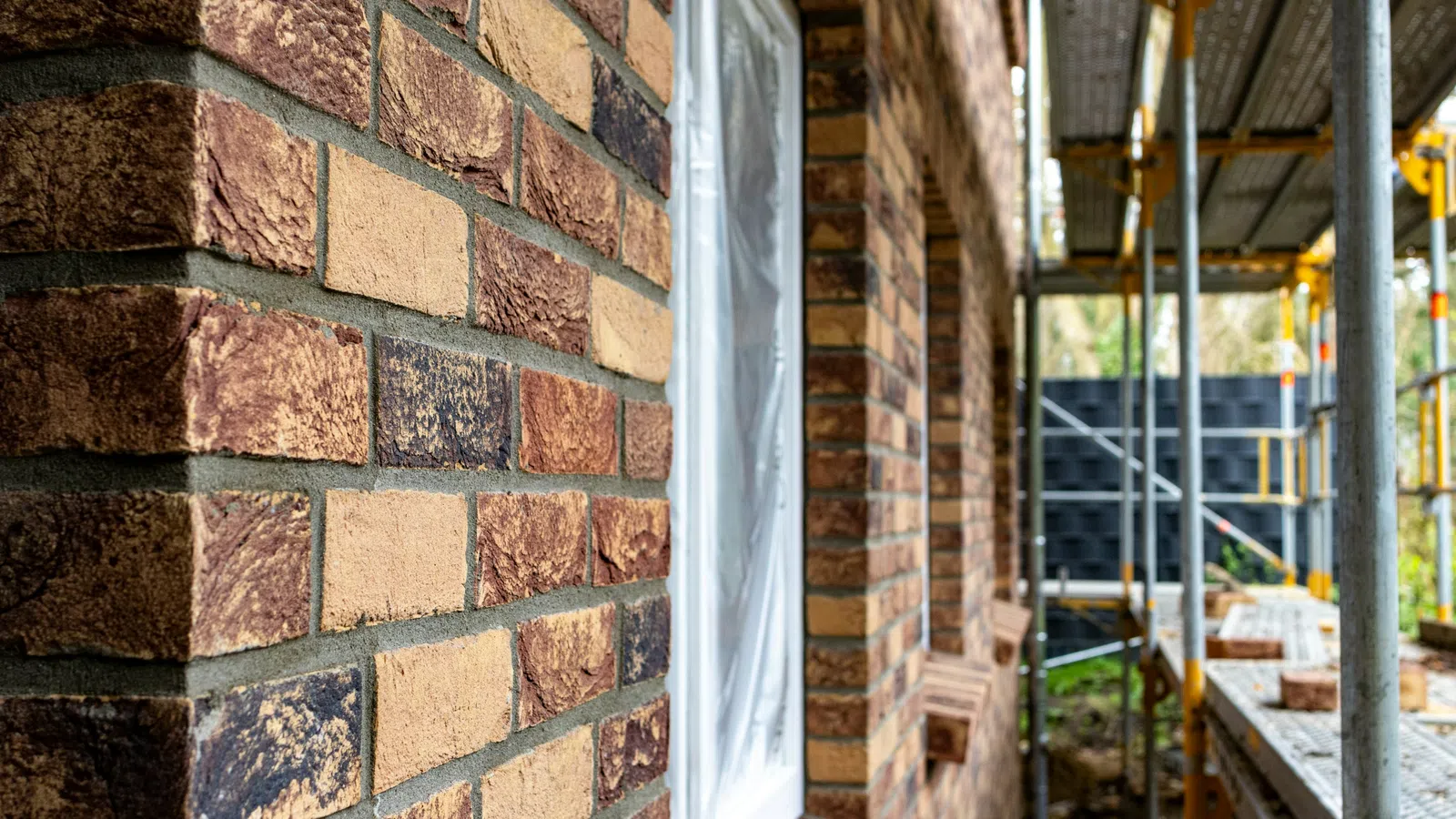
Can you insulate the walls of a brick house? Yes, in many cases. If there is a framed cavity behind the brick, injection foam can fill it from outside. Small holes are drilled in the mortar joints, the foam is pumped in, and the holes are patched to blend in. Your plaster is never touched. An inspection confirms how your walls are built first.
That last sentence matters in Louisville more than in most places. This is a brick city, from the Victorian blocks of Old Louisville to the Highlands, Crescent Hill and the postwar streets of St. Matthews. Those homes were built in different eras and in different ways, and the way a brick wall was built decides how it can be insulated.
If you own one of these homes, you have probably assumed that insulating the walls means a remodel: plaster dust, new drywall, weeks of mess. For a lot of brick homes it does not. Here is how to tell which kind of wall you have and what the work looks like.
Why does the type of brick wall matter?
Brick homes come in two basic kinds, and they look alike from the sidewalk.
The first is brick veneer. A wood-framed wall holds up the house, and a single layer of brick is laid outside it as the weather face. Behind the brick is sheathing, then the stud cavity, then your interior plaster or drywall. That stud cavity is the space that can be insulated.
The second is solid masonry. The brick itself is the structure, laid two or three layers thick, and the plaster is applied on the inside with little or no hollow space behind it. Many of the oldest brick homes in the city were built this way.
A veneer wall with an empty cavity is a strong candidate for injection foam. A solid masonry wall may not have a cavity to fill at all.
How can you tell if your brick home has a cavity to insulate?
You can look for a few clues before anyone visits. None of them is the final word, and together they give you a fair idea.
- The brick pattern. If every few rows you see a row of bricks turned so their short ends face out, those bricks are tying layers together. That usually points to solid masonry. If every brick shows its long side, veneer is more likely.
- The age of the house. Brick veneer over wood framing became the common way to build a brick house by the middle of the last century. Homes from the 1800s and early 1900s are more often solid masonry.
- Wall thickness. Measure the depth of the wall at a window or exterior door. Very thick walls suggest multiple layers of brick.
- Additions. A rear addition or enclosed porch was often framed in wood, even on a solid brick house. Those walls may be fillable when the main walls are not.
The sure way to know is a look inside the wall. An inspector can check through an outlet opening on an exterior wall or a small test spot, without harming your plaster.
How does injection foam go into a brick wall?
From the outside, through the mortar. The steps are simple to follow, and you can watch most of them from the yard.
- The crew maps the wall. They locate the stud cavities so each one gets filled, including the short ones above and below windows.
- Small holes are drilled in the mortar joints. The brick itself is left alone. Mortar is the part of the wall that is meant to be repaired over time.
- Foam is injected into each cavity. It flows around wiring and pipes and fills the space from bottom to top.
- The holes are patched with mortar. The patches are small and are finished to blend with the joints around them.
- The crew cleans up outside. The work area is on the exterior, so there is no dust to chase through the house.
Parts of the house with siding, such as gables, dormers or a sided addition, are handled a little differently. A strip of siding comes off, the cavities are filled through the sheathing, and the siding goes back on.
Why does this method protect plaster walls?
Because nothing happens on the plaster side. Old plaster is hard, heavy and often original to the house. It holds up well for generations when it is left alone, and it cracks and crumbles when it is cut into.
Insulating from the inside would mean drilling through that plaster in every stud bay, then patching, skim coating and repainting every exterior room. Working through the mortar joints avoids all of it. Your walls, trim, wallpaper and paint stay exactly as they are.
You can stay home during the work, too. The crew is outside for nearly all of it.
What if your home is solid brick with no cavity?
Then wall injection may not be the right fit, and a trustworthy inspector will tell you so. Foam needs an open space to fill. A wall that is brick all the way through, with plaster right on the inside, does not offer one.
That does not leave you without options. In a solid brick home, the attic and air leaks often account for much of the discomfort, and both can be dealt with without touching the masonry. Adding attic insulation and sealing gaps around the attic hatch, plumbing runs and wiring can make a real difference in how the house feels.
Framed sections count as well. Rear additions, enclosed porches, dormers and finished attic knee walls are frequently built with stud cavities that can be filled.
What should Louisville owners of older brick homes know first?
Louisville sits in climate zone 4, with humid, hot summers and winters that bring real cold snaps. Empty walls hurt in both seasons, which is why the upstairs of an older brick home can feel stuffy in July and chilly in January.
If your home is in one of Louisville's local preservation districts, such as Old Louisville or Cherokee Triangle, exterior changes can be subject to review. Patching mortar joints is minor work, and it is still worth checking with Louisville Metro's planning office before any exterior project starts.
It also helps to know your mortar. Older homes were often built with softer mortar than what is sold today, so ask how the patches will be made and what they will look like when they cure.
Brick home insulation: myth and fact
Myth: Brick is a good insulator, so brick homes do not need wall insulation. Fact: Brick is dense and holds heat, but it does little to resist heat moving through it. An empty cavity behind brick still lets your heating and cooling slip away.
Myth: You have to tear out plaster to insulate old walls. Fact: Where there is a cavity, injection foam goes in from the outside through small holes in the mortar joints.
Myth: Drilling will ruin the look of the brick. Fact: The holes go in the mortar, not the brick faces, and they are patched afterward. Ask to see photos of finished patches on a home like yours.
Myth: Every brick house can be injected. Fact: Solid masonry walls without a cavity may not be candidates. That is why the inspection comes before any promise about your walls.
Frequently asked questions
Will I see where the holes were? The patches are small and sit in the mortar lines, so they blend into the pattern of the wall. Fresh mortar can look slightly different from old mortar at first, and your estimator can show you examples.
How long does it take to insulate brick walls? It depends on the size of the house and how many cavities there are. Your written estimate should give the expected time on site for your home.
Do I need to move furniture or take pictures off the walls? Usually not, because the work happens outside. Your crew will tell you ahead of time if anything inside needs attention.
Can you insulate my brick home in cold weather? Yes. Injection foam can be installed in cold weather, so you do not have to wait for spring. Your estimator can plan the schedule around a hard freeze.
How long will the insulation last? Wall insulation can keep working for decades when it stays dry and undisturbed.
Find out what is behind your brick
You do not have to guess which kind of wall you have. Request a free inspection from USA Insulation of Louisville, and we will check how your walls are built, tell you honestly what can be insulated and give you a written estimate.