
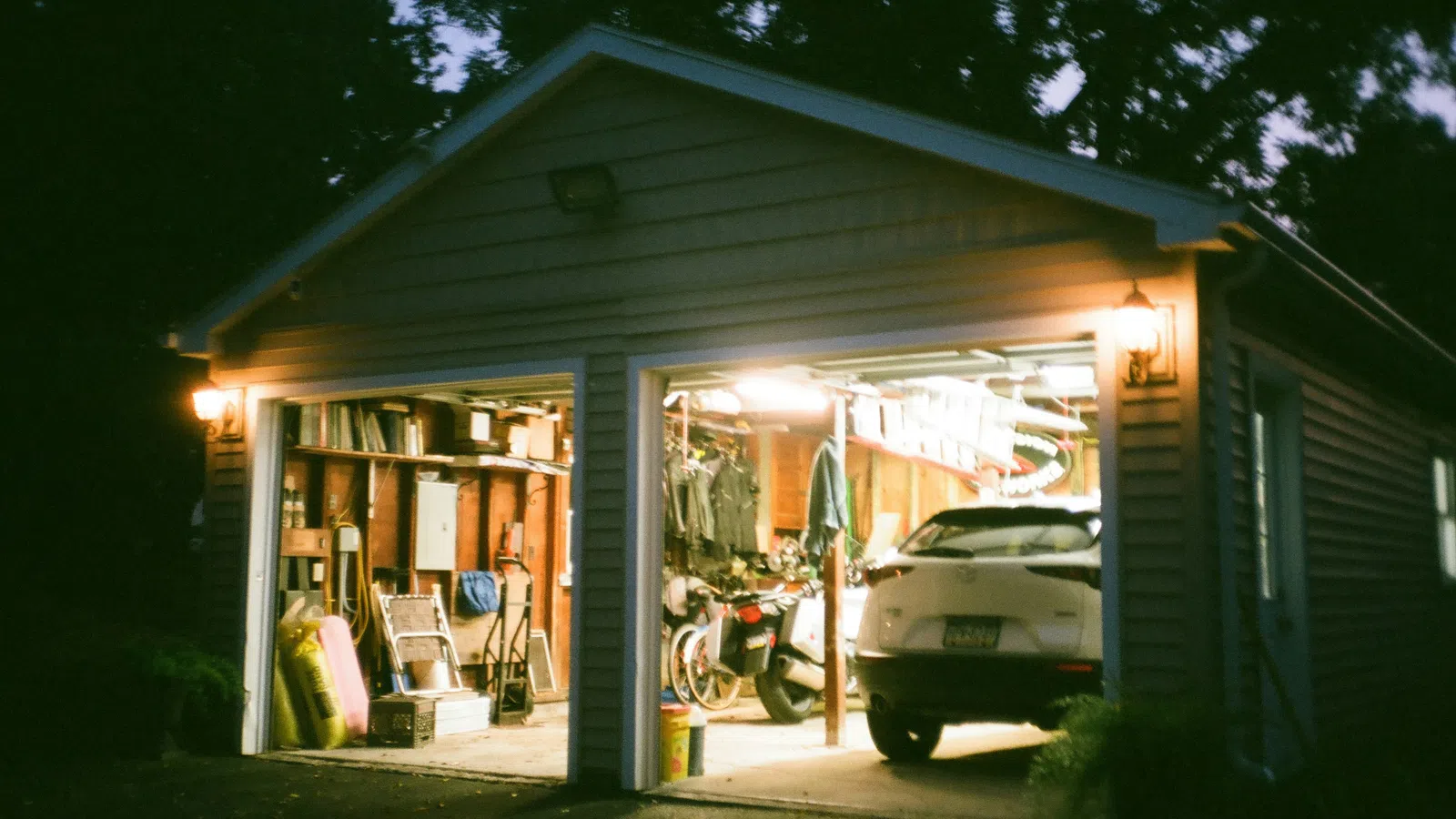
Insulating the garage is worth it when the work targets the surfaces the garage shares with your house: the common wall, the door into the house, and any ceiling under a living space. Those change how your home feels. Insulating the outer walls or garage door helps the garage, which pays off only if you use it as a room.
Attached garages are standard on most homes built around Nashville in the last few decades. Drive through the newer streets of Smyrna, Mount Juliet, Hendersonville, or Antioch and nearly every house has one, often on the side of the house that holds the kitchen, laundry, or a bedroom.
That means the garage is not really outside the house. It is a large, unheated room pressed right up against your living space, and in January it can be nearly as cold as the driveway.
Why does the garage affect the rest of your house?
An attached garage shares at least one wall with the home, and often a ceiling or floor too. Whatever temperature the garage sits at, those shared surfaces feel it.
Builders treat the wall between the garage and the house as an exterior wall, and many do insulate it. In older homes, or homes where a garage was added later, that is not always the case. Even when the wall has some insulation, the door into the house, gaps around pipes and wiring, and the joint where the wall meets the slab can let a steady stream of cold, dusty garage air into your kitchen or mudroom.
In summer the same thing happens in reverse. A closed garage on a Nashville afternoon in July can get very hot, and that heat works on the rooms next to it all day.
Which garage surface should you insulate first?
Start with whatever separates the garage from rooms you live in. In most houses, that order looks like this:
- The wall between the garage and the house. If it is hollow, filling it makes the biggest difference for the rooms on the other side.
- The door into the house. Weatherstripping and a working threshold seal stop the drafts you feel in the mudroom.
- Gaps and penetrations. Holes where plumbing, wiring, and ductwork pass from the garage into the house should be sealed.
- Any ceiling under a living space. If a bedroom or bonus room sits above, the garage ceiling is a priority.
- The garage door and outer walls. Worth doing if you use the garage as a workshop or gym. Otherwise, these come last.
How do you know whether the shared wall is insulated?
Feel it. On a cold morning, put your hand flat on the drywall on the house side of the wall. If it feels noticeably cooler than other inside walls, it is probably empty or thinly insulated.
You can also look at an outlet on the house side with the power off. Removing the cover plate sometimes shows whether there is insulation in the cavity. An inspection with the right tools gives a clear answer without opening anything up.
If the wall is hollow, injection foam can fill it through small holes that are plugged and patched afterward. The drywall stays in place on both sides.
What about the door from the garage into the house?
This door is often the leakiest spot in the whole wall. Look for daylight around the edges with the garage light on and the house side dark, and check whether the sweep at the bottom actually touches the threshold.
Replacing worn weatherstripping is an easy job most homeowners can handle. It also keeps garage air, with its exhaust and fumes from stored products, on the garage side where it belongs.
Is the space over the garage part of the same problem?
If there is a room over your garage, yes, and it is often the hardest room in the house to keep comfortable. We covered rooms over garages in an earlier post, so here is the short version: the floor of that room is the garage ceiling, and it needs to be well insulated and sealed at the edges where it meets the outside walls.
If the room above stays cold no matter what you do, that floor is the place to look first.
Pay attention to the edges, too. Where the garage ceiling meets the outside walls, there is often an open gap between the floor joists that lets garage air and outdoor air move right under the room above. Sealing those joist ends before adding insulation is what makes the difference, because insulation alone does little when cold air is blowing across it. If the cold spot in that room runs along one wall, this is usually why.
When is it worth insulating the garage itself?
If the garage is just for parking cars and storing the lawn mower, you can usually skip the outer walls and garage door. The house will feel the same either way.
It is a different story if you spend real time out there. Plenty of Nashville homeowners have turned part of the garage into a home gym, a woodshop, or a place to work on a project car. In that case, you are effectively conditioning another room, and the outer walls and big door matter.
The garage door is the largest opening, so an insulated door, or an insulation kit for the one you have, makes a noticeable difference in a garage you use as a workspace. Seals around the edges and along the bottom matter as much as the panels themselves.
Garage Surfaces Side by Side
- Shared wall between the garage and the house: Big effect on the rooms next to the garage. Worth checking in nearly every attached garage.
- Door from the garage into the house: Small fix, big effect on drafts and garage odors in the house. An easy early win.
- Garage ceiling under a bedroom or bonus room: Big effect on the room above. A priority if you have one.
- Garage door: Little effect on the house. Worth it if the garage is a workspace or gym.
- Outer garage walls: Little effect on the house. Worth it only if you heat or cool the garage.
Takeaway: insulate and seal the surfaces between the garage and your living space first. Treat the rest of the garage as optional unless you use it as a room.
What about heating or cooling the garage?
Do not run ductwork from the house system into the garage or leave a return there. Garage air can carry exhaust and fumes from stored fuel and chemicals, and you do not want any of it pulled into the house. If you want a comfortable workspace, insulate the garage and use equipment meant for that space, installed by a qualified contractor.
What does a garage check look like during an inspection?
During an insulation inspection, the shared wall and any ceiling under living space get the same attention as the rest of the house. You learn whether the cavities are empty, where air leaks between the garage and the living area, and how the rooms next to the garage compare with the rest of the home.
From there you can decide what makes sense. For most houses, that is a short list of work on the house side, not a full garage makeover.
Want to know if your garage is cooling off your house?
If the kitchen, laundry, or the bedroom next to the garage is always the coldest spot in winter, the garage may be the reason. Request a free insulation inspection from USA Insulation of Nashville and find out what is in the wall between your garage and your home.